Best Derma Roller for Split Ends: RadBizz Leads

Split ends live at the tip of the hair, but healthier growth starts at the root. Six derma rollers, ranked for scalp use, with the RadBizz 0.25mm titanium model out front.

By Harley BradleyUpdated 17 min read
On this page
- Best derma roller for split ends at a glance
- Can a derma roller actually fix split ends?
- How I screened seven listings down to six
- 1. RadBizz Derma Roller and Storage Case — Best overall
- 2. Generic Derma Beard Roller with 540 Titanium Micro Needles — Best minimal setup
- 3. Generic Derma Roller Microneedling Tool — Most versatile
- 4. Tilcare Wide Derma Roller for Face — Best for families
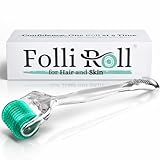
- 5. FolliRoll Derma Roller for Hair and Skin — Best upgrade
- 6. Autsmile 6-In-1 Derma Microneedling Roller Kit — Best premium
- Needle length, material and width: what the numbers mean
- What to pair with a derma roller for split ends
- Head-to-head: RadBizz vs FolliRoll
- Mistakes that make split ends worse
- The verdict
- FAQ
The best derma roller for split ends is the RadBizz Derma Roller and Storage Case, a 0.25mm titanium roller at 3.53 oz that keeps scalp rolling short, light and repeatable. If you would rather one handle switch between four wheel sizes, the Autsmile 6-in-1 kit at 0.3mm is the alternate pick. Neither will glue a split hair back together at the tip, which is the honest starting point.
Here is what buyers keep missing: split ends are dead. No roller repairs them. What a derma roller can influence, according to the listing claims across this set, is the scalp environment new hair grows from. So the picks below are judged on how well their published specifications suit scalp rolling, not on any promise to reverse damage that has already happened at the tip.
Best derma roller for split ends at a glance
| Pick | Needle length | Needles / material | Price |
|---|---|---|---|
Best overall RadBizz Derma Roller and Storage Case |
0.25mm | Titanium (count not listed) | Check Price |
Best minimal setup Generic 540 Titanium Beard Roller |
0.5 (listing) | 540 titanium claim | Check Price |
Most versatile Generic 540-Needle Microneedling Tool |
Not listed | 540 stainless steel claim | Check Price |
Best for families Tilcare Wide Derma Roller |
0.25mm claim | Titanium, ultra-wide head | Check Price |
Best upgrade FolliRoll Derma Roller for Hair and Skin |
0.30mm | 192 titanium needles | Check Price |
Best premium Autsmile 6-In-1 Derma Roller Kit |
0.3mm | Stainless steel, 4 wheels + brush | Check Price |


Can a derma roller actually fix split ends?
No, and any listing that promises otherwise is stretching the truth. A split end is a fractured cuticle at the tip of a hair that is already keratinised and no longer living tissue. Nothing rolled across your scalp reaches the split itself. Scissors do.
What a derma roller can plausibly do, based on the manufacturer claims across this set, is create controlled micro-channels at the scalp. FolliRoll says its 192-needle titanium roller is "designed to support the appearance of thicker hair and promote scalp wellness". Tilcare positions its wide roller as a "scalp derma roller for hair". These are appearance and grooming claims, not medical ones, and none of the listings here publishes clinical data.
So the best derma roller for split ends is really the best derma roller for scalp use while you trim the damaged ends off. That reframe changes what matters: short needles, comfortable width, titanium where possible, and a handle you can control without fatigue. It also rules out chasing longer needles in the hope they work faster. They do not, and at 1.0mm and above you are into territory the listings in this set do not enter anyway.
How I screened seven listings down to six
I lined up every roller in the input against three questions, in order.
- Is the needle length appropriate for scalp rolling at home? Sources vary, but the 0.25mm to 0.30mm range that dominates this shortlist is a common cosmetic-use band. Anything longer belongs to a different conversation about professional treatment, not this one.
- Does the listing publish enough detail to compare? Needle length, needle material, needle count, weight or dimensions. A listing that publishes none of these is guessing at a review it does not want you to read.
- Does the product make sense for scalp and hair, not just face? Face-only rollers are common in this category. I kept the ones the manufacturer positions for scalp, hair or "multi-use" including scalp.
Six survived. One roller here sits in Skin Care Tools > Microdermabrasion Devices rather than Facial Rollers, which is worth flagging up front: the Generic 540 Titanium beard roller lists a "0.5" size that is not clearly stated in millimetres, and the listing category is different from the others. It stays in the round-up because the needle count and material claim are useful comparators, but it is the one to research hardest before buying.
The Tilcare roller is the wide-head option; the Autsmile is the only multi-wheel kit; the FolliRoll is the only one with a published needle count above 100 and a stated country of design. Those are the set's real distinguishing features.
1. RadBizz Derma Roller and Storage Case — Best overall
The RadBizz is the best derma roller for split ends because it keeps every variable a first-time scalp roller cares about at the sensible end of the range.
Best for: beginners rolling the scalp to support fresher growth Skip it if: you want a wider head or multiple needle sizes
The RadBizz publishes what the others hide. Needle length 0.25mm, material titanium, weight 3.53 oz, dimensions 1.57 x 6.46 x 1.77 in, storage case included. Of the six, it is the only one that gives you needle length, weight and dimensions in the same listing. That matters, because a light handle at 3.53 oz is easier to control across the crown, and a short 0.25mm needle is the most forgiving for someone learning the technique.
RadBizz calls the roller "for home use only" and pairs it with printed instructions in the box. It is the cheapest of the six, which is unusual for a product with the fullest specification sheet in the set. That combination is the reason it wins here.
The trade-off is width. The RadBizz has a conventional single-head roller, not the wide format Tilcare uses, so covering the whole scalp takes more strokes. It also carries no published needle count, only a needle length. If you want to know exactly how many titanium tips you are rolling with, look at FolliRoll instead.
Pros:
- Shortest published needle length in this set at 0.25mm
- Titanium needles with a stated material, not just a claim
- Light handle at 3.53 oz for easier scalp control
- Storage case and instructions included
- Cheapest of the six
Cons:
- No published needle count
- Standard-width head, not the wide format some prefer
- Single needle length only, no upgrade path
2. Generic Derma Beard Roller with 540 Titanium Micro Needles — Best minimal setup
A stripped-back roller that costs less than most of the set and does not pretend to be a system.

Best for: a no-frills roller kept in a drawer for occasional use Skip it if: you need a storage case or clear instructions
This is the second-cheapest pick in the set. The listing claims 540 titanium micro-needles and gives dimensions of 1 x 4 x 1 in, which is the most compact body of any roller here. It sits inside Skin Care Tools > Microdermabrasion Devices rather than Facial Rollers, and the size field reads "#0.5" while the colour field reads "0.5", which is unusual and worth checking on the live listing before buying.
The manufacturer positions the tool as a beard roller usable at home, and the marketing copy on the listing focuses on face and beard rather than scalp. Split-end-focused buyers can still use it on the scalp, but the branding is aimed elsewhere, and the listing itself is sparser than the others in this round-up.
The trade-off against the RadBizz is transparency. RadBizz publishes weight, dimensions and needle length in clean units. This one publishes dimensions and model number but leaves the needle length ambiguous. If a listing that reads clearly matters to you, spend a little more.
Pros:
- Second-cheapest of the six
- Claims 540 titanium needles
- Compact 1 x 4 x 1 in body, easy to store
- Positioned for at-home use with no learning curve promised
Cons:
- Size field reads "#0.5" without a clear unit
- No published storage case or instruction set
- Listed under microdermabrasion, not facial rollers
- Slowest seller of the six by category position
3. Generic Derma Roller Microneedling Tool — Most versatile
A stainless-steel 540-needle roller positioned across scalp, beard and face on the same tool.

Best for: rotating between scalp, beard and face on the same tool Skip it if: you want titanium needles instead of stainless steel
Of the six rollers, this is the only one whose listing specifies stainless steel rather than titanium. The manufacturer claims 540 needles and a matte black handle "for a secure and comfortable hold". Its positioning is the widest of any pick here: the listing names face, beard and scalp as intended uses, which lines up with the split-ends angle where a scalp tool that also handles the beard line has obvious appeal.
Sitting mid-range on price, this Generic tool is not the cheapest pick nor the most expensive. What it does not publish is any needle length figure, which is a real gap for a derma roller. You can infer from the listing category (Hair Rollers) that it is intended for cosmetic home use, but without a millimetre figure you are trusting the brand more than you would with RadBizz or FolliRoll.
The trade-off is material. Titanium is generally considered more durable at needle scale than stainless steel, and four of the other five picks list titanium explicitly. Choose this one for the multi-use handle and the higher needle count, not for the metallurgy.
Pros:
- Highest published needle count tied with the beard-focused Generic
- Only stainless-steel option in this set
- Manufacturer positions it for scalp, beard and face
- Matte black handle claimed for grip
Cons:
- No published needle length in millimetres
- Stainless steel rather than titanium
- Weight and dimensions not published
- No storage case listed
4. Tilcare Wide Derma Roller for Face — Best for families
The wide-format pick, built to cover more scalp area per stroke.

Best for: households covering scalp area quickly in fewer strokes Skip it if: you want a published needle count or dimensions
Tilcare is the wide-head answer in this set. The listing describes an "ultra-wide" roller design that Tilcare says "ensures smoother results with a single stroke", and pairs it with a 0.25mm titanium needle claim. That two-part combination is the case for this pick: same short, forgiving needle length as the RadBizz, spread across a bigger footprint, which is genuinely useful when more than one person in the house is rolling.
Tilcare also positions the tool as a scalp derma roller for hair, a beard roller for men, and a face roller in the same listing. The branding is more explicit than the two Generic entries about scalp use, and the manufacturer calls it "ideal for face, scalp, and beard care".
The trade-off is data. Tilcare publishes size, colour and count but not needle count, weight or dimensions, which is a thinner spec sheet than the RadBizz or FolliRoll. For a product where the whole selling point is a wider head, the absence of dimensions is a real gap. If you are size-sensitive because of storage or grip, check the live listing photos closely before buying.
Pros:
- Only ultra-wide head in this set
- 0.25mm titanium needle claim, same length as the winner
- Manufacturer positions it explicitly for scalp use
- Ergonomic handle claim aimed at longer sessions
Cons:
- No published needle count
- No published dimensions or weight
- Mid-range price without the fullest spec sheet
- Slower seller than the RadBizz by category position
5. FolliRoll Derma Roller for Hair and Skin — Best upgrade
The most transparent listing in the set: 192 titanium needles, 0.30mm length, designed in Austria.

Best for: a dedicated scalp tool with a longer 0.30mm needle Skip it if: you are new to microneedling and want the shortest needle
FolliRoll is the one to consider once you know how you like to roll. The listing publishes 192 needles, 0.30mm titanium, dimensions of 1.81 x 6.3 x 1.89 in, a sea green colour, and a model number. FolliRoll also calls the roller "expertly designed in Austria", which is an unusual amount of country-of-origin detail in this category. Storage case is included.
Positioned in the premium price band, FolliRoll is the second-most-expensive pick here. What you get for the step up over the RadBizz is a fully declared needle count, a slightly longer needle at 0.30mm rather than 0.25mm, and a wider body at 1.81 in versus RadBizz's 1.57 in. The manufacturer positions it explicitly for hair and scalp, with the microneedling framing more prominent than face rolling.
The trade-off is that longer needles are less forgiving. If you have never used a derma roller, the RadBizz at 0.25mm is the safer entry point. If you already own one and want to move up a step for dedicated scalp work, FolliRoll is the reason to reopen the category.
Pros:
- Only pick with a published needle count of 192
- 0.30mm titanium needles, published clearly
- Dimensions, colour, model and country of design all listed
- Storage case included
- Explicit scalp and hair positioning
Cons:
- Second-most-expensive of the six
- 0.30mm is a step up in needle length, less forgiving
- Sales rank slower than the winner
- No published weight
6. Autsmile 6-In-1 Derma Microneedling Roller Kit — Best premium
One handle, four wheel sizes and a silicone cleaning brush in a stored plastic box.
Best for: one handle that switches between four wheel sizes Skip it if: you only want a single roller and no accessories
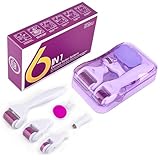
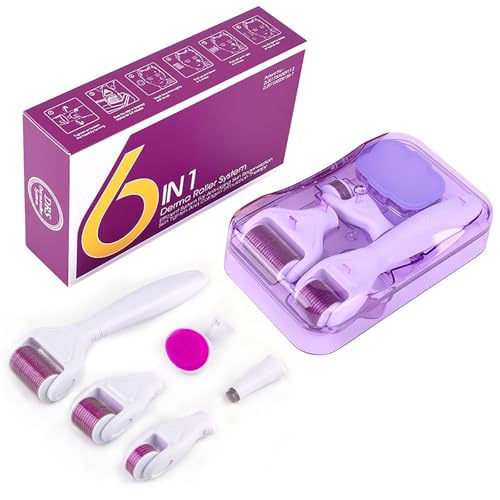
The Autsmile is the most expensive pick in this set and the only one that is really a kit. The listing describes a 6-in-1 configuration: one handle, four interchangeable wheels of different sizes, a silicone cleaning brush and a plastic storage box with a small cleaning pool. Needle length is stated as 0.3mm, material as stainless steel, colour as purple white.
The case for this pick is not that any single wheel outperforms the RadBizz on the scalp; it is that a household covering scalp, face and body from one handle spends less shelf space and has hygiene tools built in. The silicone cleaning brush and the cleaning pool are worth naming: they are the only cleaning accessories declared in any listing in this round-up.
The trade-offs are real. Autsmile publishes size and colour but no dimensions, no weight, no explicit needle count and no country of design. It is the most expensive pick with a lighter spec sheet than the FolliRoll. It is also stainless steel rather than titanium. If you want breadth and cleaning kit, this is the pick. If you want depth on a single scalp roller, look higher up the list.
Pros:
- Four wheels plus silicone cleaning brush in one kit
- Plastic storage box with small cleaning pool
- 0.30mm needle length published
- One handle for face, scalp and body
Cons:
- Most expensive of the six
- Stainless steel rather than titanium
- No published needle count, weight or dimensions
- Slower seller than the RadBizz and Tilcare
Needle length, material and width: what the numbers mean
A quick reference before you buy. These are general descriptions of the specifications on this shortlist, not medical guidance, and none of the listings here publishes clinical outcomes.
- 0.25mm. Two of the picks: RadBizz and Tilcare. The shortest length on this list and the most beginner-forgiving of the cosmetic band.
- 0.30mm. Two picks: FolliRoll and Autsmile. A step up in length that some scalp-focused users prefer, and less forgiving on technique.
- 0.5 (listing). One pick: the Generic beard roller lists the size as "#0.5" without a clear unit, which is why it needs the closest look on the live listing.
- Not listed. One pick: the Generic 540-needle microneedling tool does not publish a needle length at all.
Material is the second axis. Four of six picks (RadBizz, Tilcare, Generic beard, FolliRoll) list titanium needles. Two (Autsmile, Generic microneedling) list stainless steel. Titanium is generally considered more durable at needle scale.
Width is the third axis and the one most often ignored. Only Tilcare markets a wide head. The RadBizz publishes a width of 1.57 in, FolliRoll a width of 1.81 in, and everyone else declines to publish it. Wider heads cover the crown faster, at the cost of a heavier handle. If two people share the tool, wider is worth paying for.
What to pair with a derma roller for split ends
Rolling alone is not the plan. This is the routine the listings in this set implicitly assume, drawn from the marketing copy attached to the picks above.
- Trim the damaged tips. No microneedle claim in this set implies otherwise. Rolling does not repair a split.
- Clean the roller before and after. The Autsmile kit is the only pick that ships a silicone cleaning brush and a cleaning pool. Any of the others will need a separate cleaning routine you build yourself.
- Choose a scalp product to apply after rolling. Autsmile suggests pairing "with your preferred skincare or grooming products". None of the listings here bundles a serum.
- Roll consistently at a cadence you can maintain. Autsmile says to "proceed gradually" when switching wheels. FolliRoll frames the tool as part of a "hair care routine". Marketing language, but the point is real: sporadic rolling is not the point.
- Store the roller in a case. RadBizz, FolliRoll and Autsmile include one. Tilcare and the two Generics do not.
That is five steps, and only one of them is the rolling itself. Buyers who fixate on needle length and skip the surrounding routine are the ones who quietly abandon the tool six weeks in.
Head-to-head: RadBizz vs FolliRoll
If you are choosing between the winner and the upgrade, the deciding question is how much specification you want on the box.
RadBizz gives you 0.25mm titanium, 3.53 oz, 1.57 x 6.46 x 1.77 in and a storage case for the cheapest price in the set. It is the shortest-needle option, the lightest by published weight, and the fullest spec sheet at the entry price band. It does not tell you how many needles are on the head.
FolliRoll gives you 0.30mm titanium, 192 needles counted, 1.81 x 6.3 x 1.89 in, a colour, a model number and Austrian design language. It is the second-most-expensive pick. It does not publish a weight.
The tiebreaker for a first-time buyer is needle length. 0.25mm is more forgiving of imperfect technique than 0.30mm. That is why the RadBizz wins overall and the FolliRoll wins the upgrade slot rather than the top of the list. If you already own a 0.25mm roller and want to step up, FolliRoll is where to look next.
Mistakes that make split ends worse
A short list, because these come up over and over.
- Rolling harder to compensate for a short needle. Pressure is not the variable that matters. The needle length is set at the factory; leaning into the handle just irritates the scalp.
- Rolling straight over a split hair to "reseal" it. The tip is dead tissue. Nothing on this list changes that.
- Skipping cleaning between sessions. Only the Autsmile ships a dedicated cleaning brush. Everyone else needs a separate solution.
- Chasing longer needles fast. The 0.25mm and 0.30mm range on this list is a considered cosmetic band. Jumping past it in the hope of faster results is a common mistake.
- Rolling and not trimming. The single most reliable thing you can do for visible split ends is cut them off. The roller supports what grows next.
The verdict
Entry tier: the RadBizz Derma Roller is the pick, at 0.25mm titanium, 3.53 oz and a full spec sheet for the lowest price in this set. It is the best derma roller for split ends because it is the easiest roller here to use correctly on a scalp, and correct use is what actually matters.
Middle tier: the Tilcare Wide Derma Roller earns its place for households where more than one person will use the tool. A wide 0.25mm titanium head covers the crown in fewer strokes, and the manufacturer's scalp positioning is explicit. Accept the thinner spec sheet as the cost of the wider design.
Premium tier: the FolliRoll at 0.30mm titanium is the upgrade for anyone who already knows how they like to roll and wants 192 published needles, dimensions and a case in a single product. The Autsmile 6-in-1 takes premium in the other direction, trading depth of spec for breadth of kit, with four wheels and cleaning tools in one box. Choose the FolliRoll if you want a single dedicated scalp roller with the fullest spec sheet in the set. Choose the Autsmile if you want one handle covering scalp, face and body with cleaning gear included.
Nothing here repairs a split end. Trim first, then roll consistently.
FAQ
Does the best derma roller for split ends actually repair damaged hair?
Does the best derma roller for split ends repair damaged tips? No. Split ends are fractured cuticles on hair that is already keratinised and no longer living. Rolling the scalp cannot reach them. What the picks here target, according to their listings, is the scalp environment where new hair grows. Trim the damaged tips with scissors, then use the roller as part of a scalp routine.
Is a 0.25mm needle enough, or should I go longer?
Is a 0.25mm needle enough for a first roller? For most beginners on this shortlist, yes. Two picks sit at 0.25mm (RadBizz and Tilcare) and two at 0.30mm (FolliRoll and Autsmile). The shorter length is more forgiving of imperfect technique on the scalp. If you already own a 0.25mm roller and want a step up, FolliRoll's 0.30mm titanium 192-needle head is the upgrade to consider.
RadBizz vs Tilcare: which is the better scalp roller?
RadBizz vs Tilcare comes down to head width against spec transparency. Both list 0.25mm titanium needles. RadBizz publishes weight at 3.53 oz, dimensions of 1.57 x 6.46 x 1.77 in and includes a storage case for the lowest price in the set. Tilcare skips those figures but offers an ultra-wide head that covers scalp area in fewer strokes. Solo user, take RadBizz; two people sharing, take Tilcare.
Is a titanium derma roller worth it over stainless steel?
Is a titanium derma roller worth the choice over stainless steel? For most buyers on this list, yes. Four of the six picks list titanium needles (RadBizz, Tilcare, Generic beard, FolliRoll) and two list stainless steel (Autsmile, Generic microneedling). Titanium is generally considered more durable at needle scale. Neither Generic nor Autsmile publishes a needle count in the listing photos, which is a separate transparency issue.
How often should I use a derma roller on my scalp?
How often should you use a derma roller on the scalp? None of the listings in this set publishes a specific cadence, and this article does not offer medical guidance. Autsmile's copy says to "proceed gradually" when adjusting the tool, and FolliRoll frames its roller as part of a "hair care routine" rather than a one-off treatment. Consistency at whatever cadence you can maintain matters more than frequency for its own sake.
The honest way to shop for the best derma roller for split ends is to accept the reframe first: buy the roller that suits your scalp, then trim your ends on the same schedule you always should. The RadBizz wins the default pick because it publishes more useful specifications at a lower price than any other roller in this set, and its 0.25mm titanium head is the length most first-time users get on with. Add a pair of sharp scissors, a cleaning routine and a serum you actually like, and the tool starts earning its shelf space instead of gathering dust next to it.