Best Korean LED Face Mask by Wavelength and Coverage
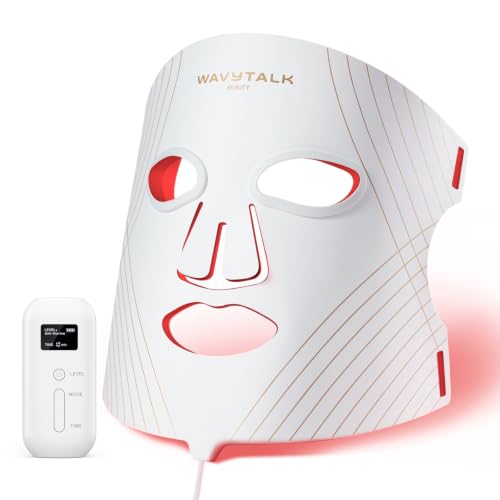
Six LED face masks compared for combination skin. The wavytalk Glow Time leads with 456 LED chips and three modes; the Qure Q-Rejuvalight Pro wins on FDA clearance and app control.

By Harley BradleyUpdated 15 min read
On this page
- The wavelength question that actually decides this
- A word on the Korean label
- Best korean led face mask for combination skin at a glance
- How I screened the shortlist
- 1. wavytalk Glow Time LED Face Mask — Best overall
- 2. Qure Q-Rejuvalight Pro LED Face Mask — Best premium
- 3. iRestore LED Face Mask — Best upgrade
- 4. NEWKEY 4D LED Face Mask — Most versatile
- 5. gelpal 7+1 Colors LED Mask — Best for families
- 6. zorendi 7 Colors LED Mask — Best budget pick
- What combination skin needs from an LED mask
- How long before you see anything?
- What to skip when you shop
- The verdict
- FAQ
The best korean led face mask for combination skin is the wavytalk Glow Time, because 456 LED chips at 40mW/cm² across three targeted modes lets you treat oily zones and dry zones without swapping devices. If you want an FDA-cleared unit with app-guided sessions instead, the Qure Q-Rejuvalight Pro is the better buy, with five wavelengths, 160 dual-core LEDs and a 3-minute daily protocol.
The wavelength question that actually decides this
Most guides to the best korean led face mask for combination skin compare colour counts. Seven colours sounds better than three. It usually is not.
Combination skin is two problems in one face. The T-zone runs oily and breaks out, so it wants blue (around 415nm) to hit acne bacteria. The cheeks run dry and show early lines, so they want red (around 630nm) and near-infrared (around 830 to 850nm) to reach deeper tissue. Everything else on the colour wheel is decoration.
That is the criterion. A mask with three well-chosen wavelengths at real power density will do more for combination skin than a mask with seven that spreads its LEDs thin. Chip count and power density decide dose; wavelength choice decides target. Judge on both.
A word on the Korean label
None of the six listings is manufactured in Korea, and Amazon's search did not filter for that. Treat the Korean framing as a style cue — the K-beauty look of a full-face silicone or hard-shell mask worn during a skincare routine — rather than a country of origin. If a Korean brand is a hard requirement for you, none of these will satisfy it, and you should look elsewhere.
Best korean led face mask for combination skin at a glance
| Pick | Wavelengths | LED count | Price |
|---|---|---|---|
Best overall wavytalk Glow Time LED Face Mask |
415, 590, 630, 850nm claim | 456 chips | Check Price |
Best premium Qure Q-Rejuvalight Pro |
415, 630nm + deep-red, amber, infrared | 160 dual-core | Check Price |
Best upgrade iRestore LED Face Mask |
415, 635, 830nm claim | 360 LEDs | Check Price |
Most versatile NEWKEY 4D LED Face Mask |
Red 630nm + blue claim | 150 LEDs / 450 chips | Check Price |
Best for families gelpal 7+1 Colors LED Mask |
7 colours claim | 90 beads | Check Price |
Best budget pick zorendi 7 Colors LED Mask |
7 colours claim | 90 beads | Check Price |


How I screened the shortlist
I lined up the published data field by field. Wavelengths first, because that decides what the mask actually treats. LED count and power-density claims next, because dose matters. Then the physical spec: weight, dimensions, corded or cordless, silicone or hard shell. Session length and frequency last, because a 3-minute protocol you finish beats a 20-minute protocol you skip.
Three things got picks cut in my ranking rather than the list:
- Vague wavelength claims. If the listing counts "7 colours" without naming the nanometres, I trust the mask less for combination skin, because you cannot verify that blue and red sit where they should.
- Weak coverage. A mask with under 100 LED beads is thinner light across the same face, and combination skin needs even dose across two very different zones.
- Missing power-density figures. Only wavytalk publishes a mW/cm² number in this set. That is not proof the others are weaker, but it is a reason to weight the ones that do share the number.
Everything on the list survived those cuts. The ranking sorts them by how well they suit combination skin, not by price.
1. wavytalk Glow Time LED Face Mask — Best overall
The wavytalk Glow Time is the best korean led face mask for combination skin because it targets both problems on one face with three named wavelength combinations and the highest published power density in this set.
Best for: combination skin that flares in the T-zone but dries on the cheeks Skip it if: you want cordless use around the house
The three modes are what make this mask right for combination skin. Anti-Fine Line pairs 630nm red with 850nm near-infrared for the drier cheeks and forehead lines. Anti-Acne pairs 415nm blue with 630nm red for the oily T-zone. Rejuvenation uses 590nm amber for calming. That maps neatly to the two-problems-one-face reality; you are not paying for green and purple you will not use.
The numbers back the modes. wavytalk lists 456 LED chips and a 40mW/cm² power-density claim, which is the only mW/cm² figure published across the six. The mask is soft liquid silicone with light-sealing eye pads and adjustable straps, and the brand claims clinical results at 28 days with 3 to 5 sessions weekly. Session length is flexible: 10, 15 or 20 minutes.
The trade-off is that it is the only pick with a corded design implied by its multi-mode operation, and no weight is published. Against the Qure it lacks FDA clearance and app control; against the iRestore it lacks a formal LED count advantage but wins on chip count and named wavelengths.
Pros:
- Three modes mapped to combination-skin zones
- 456 LED chips, the highest in this set
- Published 40mW/cm² power density claim
- Soft silicone with light-sealing eye pads
- Flexible 10, 15 or 20 minute sessions
Cons:
- No published weight or dimensions
- No FDA clearance stated
- Only one seller lists it
2. Qure Q-Rejuvalight Pro LED Face Mask — Best premium
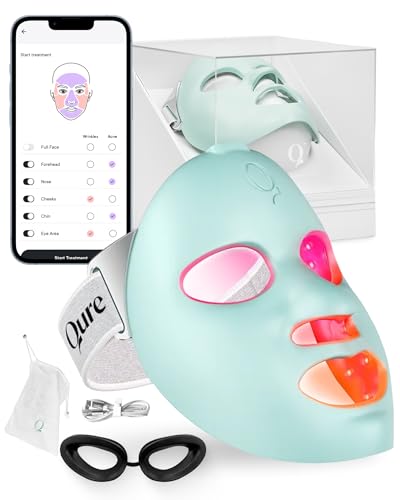
The Qure Q-Rejuvalight Pro is the pick if FDA clearance and a short daily protocol matter more to you than session flexibility.
Best for: shoppers who want FDA clearance and app-guided sessions Skip it if: a 4.21 lb mask on your face sounds like a chore
Qure describes this as the first FDA-cleared customisable at-home LED light therapy device clinically validated to improve the appearance of wrinkles and mild to moderate inflammatory acne. That matters for combination skin, where both conditions can appear on different zones of the same face. Five wavelengths are named: red at 630nm, blue at 415nm, deep-red, amber and infrared. The clearance is what you are paying for.
The build is different from the flexible silicone masks. It is a hard-shell mask weighing 4.21 lb with dimensions of 6.25 x 11 x 9.75 in, and Qure supplies 160 dual-core LEDs, an adjustable head strap, a USB-C cable and a storage case. Sessions are 3 minutes daily rather than 10 to 20, which is the shortest protocol in this roundup. There is also a companion app, which none of the other five picks offer.
The trade-off is weight and price position. This is the most expensive pick here and by far the heaviest; the wavytalk covers more of the face with softer contact. Skip it if you want to move around during treatment.
Pros:
- FDA cleared for wrinkles and acne
- 160 dual-core LEDs across five wavelengths
- 3-minute daily protocol, shortest here
- Smart app control included
- USB-C rechargeable
Cons:
- 4.21 lb, heaviest in the set
- Most expensive pick here
- Only one seller lists it
3. iRestore LED Face Mask — Best upgrade
The iRestore sits between the budget and premium tiers with 360 LEDs and three named wavelengths, and it weighs less than half of the Qure.

Best for: buyers stepping up from a cheap mask who want more LEDs and a lighter build Skip it if: you need more than three wavelength modes
This is the mask I would choose if the Qure feels like too much device and the wavytalk feels like too little brand history. iRestore lists 360 LEDs and three wavelengths: red at 635nm, infrared at 830nm and blue at 415nm. That is the classic combination-skin lineup — blue for the T-zone, red and infrared for the cheeks — with no colours you will never use.
The physical build is the strongest argument for it. Weight is 1.81 lb, well under half the Qure's, with dimensions of 5.16 x 9.25 x 8.9 in. iRestore describes a dual-strap design that hovers over the face and blocks light from the eyes. Sessions run 10 minutes, 3 to 5 times weekly. The listing claims the brand has over 500,000 customers and 20 years of R&D, which is a longer track record than most in this set.
The trade-off is flexibility. There is no app, no session-length choice beyond 10 minutes, and no FDA clearance stated the way Qure lists one. Against the wavytalk it publishes no power-density figure, so dose is harder to compare directly.
Pros:
- 360 LEDs across three wavelengths
- Only 1.81 lb, lighter than most
- Dual-strap hover-fit design
- Named red, blue and infrared wavelengths
- Long stated brand history
Cons:
- No power density figure published
- No FDA clearance stated
- Fixed 10-minute session length only
4. NEWKEY 4D LED Face Mask — Most versatile
The NEWKEY 4D is a corded mask with a contoured fit and 450 light-emitting chips across 150 LEDs, and it is the only pick with more than one seller listing.

Best for: anyone who wants a corded mask with a contoured fit Skip it if: you want to move around during a session
NEWKEY's pitch is the 4D contour: a shape it says covers more of the face than flat masks and delivers higher irradiance to the areas most prone to lines. It packs 150 LEDs and 450 light-emitting chips, which lands it just behind the wavytalk on chip count. Wavelengths are red at 630nm and blue for acne, which is the minimum useful combination for combination skin: blue for the T-zone, red for the cheeks and forehead.
The design choice worth noting is the cord. NEWKEY describes it as "corded for consistent power" with no battery drop-off. That is a genuine trade: steady output for the length of a session, at the cost of being tethered to an outlet. Sessions are 10 minutes. Dimensions are 5.5 x 9.8 x 7.8 in.
The trade-off against my top pick is that NEWKEY offers only two wavelength modes rather than three, and does not publish a power-density figure. Against the Qure and iRestore, no FDA clearance is stated. But it is the only mask here with two sellers, and the contour claim is a real fit advantage for narrower faces.
Pros:
- 150 LEDs and 450 chips
- Corded design for stable output
- 4D contour for closer facial fit
- Named red and blue wavelengths
- The only pick with two sellers
Cons:
- Only two wavelength modes
- Tethered to an outlet during use
- No power density figure published
5. gelpal 7+1 Colors LED Mask — Best for families
The gelpal 7+1 is the pick if several people in a household want to try LED, since seven colours cover more skin concerns than three even when each is less targeted.

Best for: households sharing one device across different skin types Skip it if: you want a mask focused on clinical red and near-infrared only
Family sharing is a real use case that changes the wavelength maths. If a partner wants to work on acne and you want to work on tone, a seven-colour mask covers both without arguments. gelpal lists red, blue, yellow, green, purple, cyan and white LEDs, and describes 90 high-performance LED beads targeting more than 60 facial zones in 15-minute sessions.
For combination skin specifically, you will use two of those colours: blue for the T-zone and red for the cheeks and forehead. The other five are there for other skin concerns that other people in the house might want to try. The mask is cordless, one-touch, and the listing describes it as an over-the-counter LED device emitting light in the red, blue and amber spectrum.
The trade-off is precision. gelpal names the colours but not the nanometres, so you cannot verify whether the blue sits at the acne-active 415nm range. LED count is 90 versus wavytalk's 456 chips, so dose per zone is lower. That is the honest cost of a family-friendly device at this price.
Pros:
- Seven colours plus indicator light
- Cordless and portable
- One-touch 15 minute sessions
- 90 LED beads across 60+ zones
- Broadest use-case coverage in the set
Cons:
- Wavelengths named by colour only
- Lowest LED count alongside the zorendi
- No power density figure published
6. zorendi 7 Colors LED Mask — Best budget pick
The zorendi is the cheapest way into LED therapy in this set, and it lets you find out whether a mask fits your routine before you spend more.

Best for: first-time buyers testing whether LED fits their routine at all Skip it if: you want documented wavelength figures
Most people who ask about LED masks have never used one. The zorendi is the cheapest of the six and it is set up to answer the routine question quickly: does this fit into your week, and will you actually put it on? One-touch operation, a forehead button, a fixed 10-minute session, cordless, rechargeable. Dimensions are 4.92 x 9.06 x 7.68 in.
The specs mirror the gelpal closely: seven colours (red, blue, green, yellow, cyan, purple, white), 90 LED beads, coverage of more than 60 facial areas. For combination skin you will use the red and blue modes and rarely touch the rest. That is fine at this price. If the mask sticks in your routine after a month, you can upgrade to the wavytalk or the iRestore later without regret.
The trade-off is the same as the gelpal, only sharper because it is the slowest seller of the six in the input data. Colours are not tied to nanometres in the listing. LED count is the lowest here alongside the gelpal. No power-density figure is published, and no FDA clearance is stated.
Pros:
- Cheapest of the six
- One-touch cordless operation
- Rechargeable, no cable needed
- Seven colour modes for experimenting
- Simple 10 minute session
Cons:
- Wavelengths not stated in nanometres
- Lowest LED count in the set
- No power density figure published
What combination skin needs from an LED mask
Combination skin is not one problem. It is at least two. The rules that follow assume you want to treat both without buying two devices.
- Blue at 415nm for the oily zones. Blue light targets the bacteria linked to acne. For the T-zone — forehead, nose, chin — this is the one you want on.
- Red at 630 to 635nm for the drier zones. Red penetrates less deeply than near-infrared but works well on surface tone and fine lines around the cheeks and eyes.
- Near-infrared at 830 to 850nm for anything below the surface. If you have any early volume loss or nasolabial-fold concerns, near-infrared reaches deeper than red alone.
- Even coverage. More LEDs across the same mask footprint means less dead space between beads, and combination skin needs the light to reach both the greasy centre and the drier edges of your face.
- Adjustable dose. Either a variable session length or a variable mode. That is how you give the cheeks less energy than the T-zone if one zone reacts more than the other.
A mask that offers all five is rare. A mask that offers the first three is enough. Everything after that is a bonus.
How long before you see anything?
Nothing here works overnight. The wavytalk cites 28 days for clinical results with 3 to 5 sessions weekly, and that is the fastest specific figure in this roundup. The Qure cites 3 minutes daily but does not publish a specific week count for visible change. iRestore describes 10 minute sessions 3 to 5 times weekly without pinning a date.
Reasonable expectations, given what the listings actually say:
- First two weeks. Small changes in tone and texture. The T-zone often calms first if you are using blue.
- Weeks three and four. Line softening and clearer skin around the cheeks if you are using red and near-infrared consistently.
- Beyond week four. Deeper changes, if you are still using it three to five times a week. This is the point at which most people quit; the ones who keep going see the most.
The single biggest predictor of results is not the mask. It is whether the mask fits into your evening. A lighter, cordless mask you use five times a week beats a premium mask you use twice.
What to skip when you shop
A few things buyers overpay for, based on the six listings side by side.
- Colour counts above four. Green, yellow, cyan and purple are marketing colours in most consumer masks. If a mask trades LED density for extra colour indicators, you lose dose without gaining treatment.
- Cordless when you sit still anyway. If you use LED while lying down or scrolling on the couch, corded is fine, and NEWKEY's argument about steady output has some force.
- Session lengths under 3 minutes. The Qure works because it is FDA cleared and specifically designed around a short daily protocol. A no-name mask promising a 3-minute miracle is a different animal.
- Any mask that will not tell you the nanometres. "Red light" without a number could be anywhere from 620 to 700nm. That range covers real treatment wavelengths and decorative ones. Ask for the number, or pick a mask that publishes it.
The verdict
The best korean led face mask for combination skin is the wavytalk Glow Time, and the reason is that it addresses both halves of the problem on one face. Three targeted modes cover 415nm blue for the T-zone, 630nm red and 850nm near-infrared for the cheeks, and 590nm amber for calming. It also carries the highest LED chip count in this set at 456, and the only published power-density claim at 40mW/cm².
Two conditions flip the recommendation. If you want FDA clearance, an app-guided session and the shortest daily protocol at 3 minutes, buy the Qure Q-Rejuvalight Pro instead — its 4.21 lb weight and price position are the cost. If you are stepping up from a first mask and want a lighter build with a longer brand track record, the iRestore at 1.81 lb with 360 LEDs is the middle path, and it wins on comfort during longer sessions.
The two budget-tier picks — gelpal and zorendi — are legitimate entry points, especially for a household sharing one device. Just do not expect the same dose per zone as the wavytalk.
FAQ
Is a Korean LED face mask worth it for combination skin?
Is a Korean LED face mask worth it for combination skin depends on how consistent you are. LED works when you use it three to five times a week for at least four weeks; wavytalk cites 28 days for clinical results. Combination skin benefits more than most skin types because a single device with blue plus red modes replaces two separate treatments, so the cost per problem drops.
What wavelengths should a combination-skin mask offer?
What wavelengths a combination-skin mask should offer come down to three numbers: 415nm blue for the acne-prone T-zone, around 630nm red for tone and fine lines on the cheeks, and 830 to 850nm near-infrared for deeper tissue work. The wavytalk and iRestore both name all three. Masks that only advertise "seven colours" without listing the nanometres are harder to verify for combination skin.
How does the wavytalk Glow Time compare to the Qure Q-Rejuvalight Pro?
How the wavytalk Glow Time compares to the Qure Q-Rejuvalight Pro comes down to clearance versus coverage. Qure is FDA cleared, weighs 4.21 lb, uses 160 dual-core LEDs and runs 3 minutes daily with an app. wavytalk is not FDA cleared but publishes 456 chips, a 40mW/cm² power density and three combination-skin-friendly modes. Choose Qure for clearance, wavytalk for chip density and mode flexibility.
How many times a week should I use an LED face mask?
How many times a week you should use an LED face mask depends on the listing's protocol, but three to five sessions is the common range across this set. wavytalk suggests 3 to 5 times weekly with 10, 15 or 20 minute options; iRestore says 3 to 5 times weekly at 10 minutes; Qure says 3 minutes daily. Consistency matters more than session length.
Can I use an LED mask on only one part of my face?
Can I use an LED mask on only one part of my face is a fair question for combination skin, and the honest answer is that these full-face masks treat the whole face at once. What you can do is use blue-mode sessions on days your T-zone flares and red or near-infrared modes on days your cheeks feel dry. The wavytalk's three modes make this easiest.
Start with the wavytalk if combination skin is your main concern and you can commit to three sessions a week for a month. That is what the clinical timeline in the listing describes, and it is the mask in this set with the strongest combination of chip count, named wavelengths and mode targeting. If you already know you will only stick with something short and fuss-free, the Qure's 3-minute daily protocol is the safer bet even at the higher price position. The one thing not to do is buy the cheapest mask, use it twice, and decide LED does not work. It works. You have to show up.